
Sanjay K Mohindroo
Failure becomes useful when reflection turns experience into better judgment, stronger choices, and a wiser second attempt.
A setback gains meaning when it changes the way you begin again.
The Moment After a Setback
The next decision matters more than the last result
Failure often feels final while we are standing inside it. Confidence drops, plans look weaker, and past choices become easy targets.
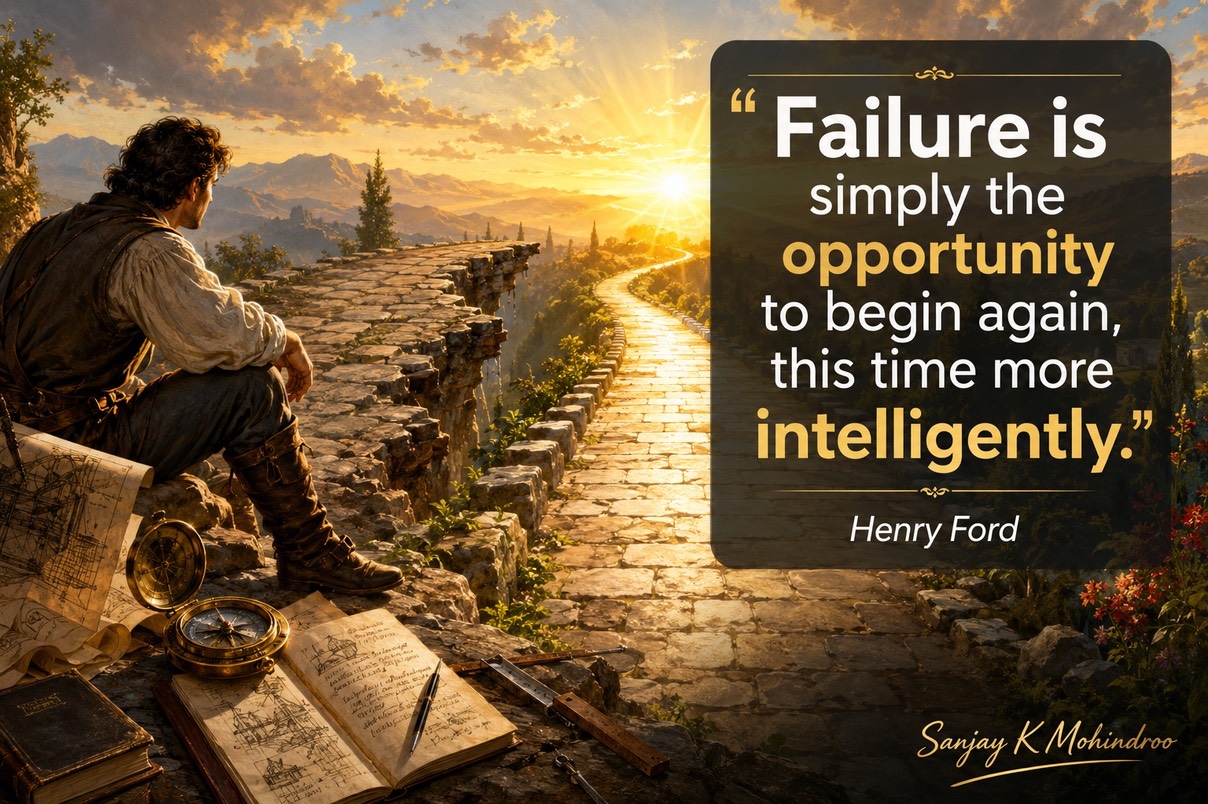
Henry Ford captured a more useful perspective: “Failure is simply the opportunity to begin again, this time more intelligently.”
The message is not that failure feels good or deserves celebration. A disappointing result can become valuable information when reflection turns experience into better judgment.
That distinction matters in careers, relationships, leadership, and ordinary life. Growth does not come from falling repeatedly. It comes from changing the way we stand back up.
Failure Does Not Automatically Create Growth
Experience needs reflection before it becomes wisdom
People often say that failure makes us stronger. That statement is comforting, but it is incomplete.
Failure can make someone stronger, but it can also create fear or bitterness. The outcome depends on what happens after the setback.
A person may repeat the same behavior while simply working harder. A leader may blame the team without questioning the original assumptions. Someone may avoid future risks because one attempt ended badly.
None of those responses creates intelligent failure.
Growth begins when we examine the result without hiding from it. Reflection separates bad luck from bad judgment and reveals which choices need to change.
The Real Value Is Better Judgment
A second attempt should carry evidence from the first
Beginning again does not mean pretending the first attempt never happened. It means carrying useful evidence forward.
That evidence may show that the timing was wrong. It may reveal weak preparation, unrealistic expectations, or a warning sign that went ignored.
This is where a growth mindset becomes practical rather than motivational. The next attempt should be different because the previous result taught us something concrete.
Intelligent failure asks better questions. Which assumption failed? Which signal did I miss? Which decision would I change today?
Those questions turn disappointment into direction.
Second Chances Require Change
Restarting without adjustment only repeats the pattern
Life gives many second chances, but second chances have limited value without changed behavior.
Someone can leave one unhealthy workplace and recreate the same boundaries elsewhere. A manager can restart a project while keeping the same flawed decision process. A person can repair a relationship without changing the habits that caused conflict.
Starting over is not enough.
A meaningful second chance includes reflection, accountability, and adjustment. The goal is not perfection on the next attempt. The goal is a more intelligent response than before.
Confidence Should Come from Adaptation
Strength is visible in the quality of the next decision
Many people connect confidence with certainty. Mature confidence often looks different.
It accepts that an earlier choice failed without turning that result into a permanent identity. It stays open enough to reassess, and steady enough to act again.
That mindset matters because fear often grows after failure. Reflection can reduce that fear by replacing vague regret with clear information.
When we understand what happened, the next step becomes less mysterious. We may still feel uncertain, but we are no longer starting from zero.
Experience becomes an advantage when it improves the next decision.
Begin Again with Better Information
The setback matters less than the intelligence you carry forward
Failure does not deserve worship, and success does not require dramatic mistakes. Yet setbacks remain part of any serious life.
The practical response is simple: examine what happened, keep the useful evidence, and change the next move.
The strongest comeback is rarely the loudest one. It is the moment when experience becomes judgment, and judgment changes behavior.
A failed attempt can close one chapter without closing the story. Begin again, but make sure the next beginning knows more than the last one did.
#Failure #GrowthMindset #Reflection #SecondChances #PersonalGrowth #Leadership #LifeLessons
The perspective behind the quote
Henry Ford founded Ford Motor Company and became one of the defining industrial figures of the twentieth century. The quote matters because it frames failure as information rather than a final verdict. That perspective remains relevant wherever people must make decisions, absorb setbacks, and try again with better judgment.