
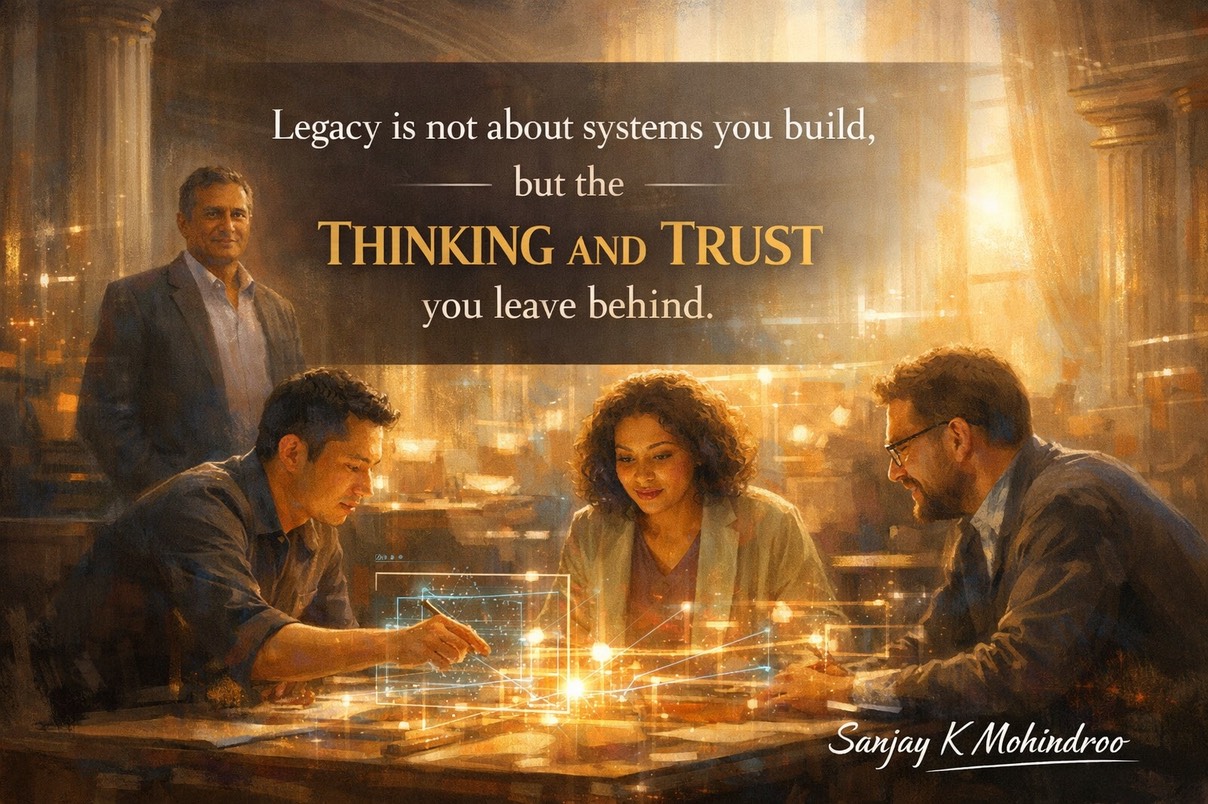
Sanjay K Mohindroo
True IT leadership leaves more than systems behind. It shapes people, trust, and decisions that last long after roles change.
Legacy in IT is not about tools or titles. It is about the thinking and trust that remain long after leaders move on.
Technology leaders are judged by delivery. Systems shipped. Costs saved. Risks reduced. These matter. But they fade fast.
Legacy lasts longer.
An enduring IT leadership impact is not built through tools or titles. It is built through judgment, culture, and the ability to shape how an organization thinks about technology when the leader is no longer in the room.
This post explores what legacy really means for IT leaders today. It looks at decisions that outlive roadmaps. It studies leaders whose impact stayed relevant across decades of change. It challenges shallow views of success and replaces them with a clearer, harder standard.
Legacy is not soft. It is not sentimental. It is practical. It shows up in teams that think well under pressure, systems that age with grace, and trust that holds during failure.
This is a call for leaders who want their work to matter after the dashboards stop updating.
Every IT leader leaves something behind. The question is whether it holds value.
Most careers end with a quiet handover. A few files. A final meeting. Another name steps in. The stack moves on. The noise fades.
Yet some leaders leave behind clarity. Their teams still use the same mental models years later. Decisions still echo their values. Systems still reflect restraint and care.
This difference is not luck. It is intent.
Legacy is built through daily choices. The hard ones. The dull ones. The ones no one praises in the moment. It comes from saying no more than yes. From building trust before speed. From shaping people before platforms.
In a world obsessed with fast change, legacy may sound slow. It is not. It is durable.
The Meaning Beyond Tenure
Impact That Outlasts Roles
Tenure is time served. Legacy is value retained.
Many leaders confuse the two. They believe impact ends with access. When the badge stops working, so does influence. This belief shrinks leadership into a job scope.
True IT leadership works differently.
Enduring impact lives in habits. In review rituals. In how teams ask questions. In how risk is spoken about. In how failure is handled without panic.
When leaders shape these patterns, they stay active even in their absence. The organization does not need reminders. It already knows the standard.
This is where legacy begins.
Systems That Age with Grace
Design Choices That Respect Time
Great systems do not chase trends. They absorb change.
Legacy-minded leaders build with time in mind. They resist tight coupling. They choose clarity over clever tricks. They document thinking, not just steps.
This approach does not slow teams. It saves them later.
One global bank learned this the hard way. In the early 2000s, its IT leadership pushed speed above all. Systems shipped fast but aged poorly. Each new rule added risk. Each fix broke something else.
A later CIO changed course. He paused the expansion. He forced teams to refactor core services. He set a rule. No new tool unless it reduces future load.
The payoff came years later. During a major market shock, systems held. Changes shipped without chaos. New leaders inherited strength, not debt.
That is legacy at work.
People Who Think, Not Just Execute
Capability Over Control
Control fades when leaders leave. Capability stays.
Enduring IT leaders invest in judgment. They train teams to reason, not wait. They explain why choices matter. They allow dissent when it is grounded.
This takes patience. It slows meetings. It invites debate. It also builds teams that scale without fear.
A large healthcare provider offers a clear example. Its CTO shifted focus from delivery targets to decision skill. Architecture reviews became teaching sessions. Post-incident talks focused on thinking gaps, not blame.
Over time, something changed. Teams stopped escalating small calls. Engineers spoke with confidence. New managers adapted faster.
When the CTO moved on, the behavior stayed. That is the mark of legacy.
Trust as a Technical Asset
Credibility That Carries Forward
Trust is not soft. It is operational.
When trust exists, teams share risk early. Vendors speak plainly. Boards listen. During a crisis, speed improves because fear drops.
Leaders build trust through consistency. Through honest trade-offs. Through owning failures without drama.
One public sector IT leader faced a large breach early in her role. She did not deflect. She spoke clearly. She shared gaps. She laid out fixes in plain terms.
Years later, she left the role. Her successors still benefited. The organization had a culture of candor. Security issues surfaced early. Reviews were sharp, not defensive.
Trust outlived tenure.
Values Embedded in Decisions
Culture Written in Code and Process
Values show up in small calls. What gets logged? What gets ignored. Who gets heard?
Legacy leaders make values visible through action. They align incentives. They design a process that rewards care, not noise.
A global retail firm struggled with constant churn. Projects launched and died fast. Teams burned out. Customers noticed.
A new IT head made one shift. No project approval without a clear problem statement and exit plan. Vanity work stopped. Focus returned.
Years later, even after leadership changed, the rule held. It became part of the firm’s rhythm. That rhythm was the legacy.
Case Study: Satya Nadella at Microsoft
Culture Reset as Lasting Impact
When Satya Nadella became CEO, Microsoft was strong yet inward. Tech choices were sound. Culture was brittle.
His lasting impact was not a product. It was a mindset shift.
He pushed empathy. He changed how teams spoke to each other. He framed technology as service, not dominance.
This shift unlocked growth. Cloud scale followed. Partnerships returned. But the bigger change was cultural.
Years later, even critics agree. The tone held. New leaders still echo the same values. That is legacy leadership in motion.
Case Study: Nandan Nilekani at UIDAI
Institution Built for Scale and Restraint
India’s digital identity system faced immense pressure. The scale was vast. Stakes were high.
Nandan Nilekani focused on structure. Open standards. Clear roles. Strong checks. He resisted excessive control. He allowed an ecosystem to grow.
The result was not just a platform. It was an institution that could evolve.
After his exit, the system did not stall. It expanded with care. Policy debates continued. The core stayed stable.
Legacy here was not authority. It was architecture.
Case Study: A Quiet Legacy in Manufacturing IT
When Less Visibility Brings More Value
Not all legacies are famous.
A mid-size manufacturing firm in Europe faced rising IT costs and brittle plants. The CIO chose restraint. He cut tools. He simplified data flows. He trained plant leads to own tech choices.
There were no headlines. But five years later, downtime fell. Upgrades became routine. New leaders inherited calm systems.
Legacy does not need applause. It needs endurance.
The Risks of Chasing Recognition
Short Wins, Long Damage
Legacy dies when leaders chase credit.
Over-custom systems. Loud pilots. Tool sprawl. These create noise now and pain later.
Many leaders fall into this trap. The market rewards motion. Boards praise speed. Careers move fast.
But impact shrinks.
Enduring leaders accept delayed praise. They build quietly. They leave space for others to shine.
That discipline defines their mark.
A Clear Standard for Enduring Impact
Three Questions That Reveal Legacy
Every IT leader should ask three questions.
First. Would the organization make the same decision a year after I leave?
Second. Do teams explain choices with clarity or with my name?
Third. Does the system bend without breaking when stress hits?
If the answer is yes, legacy is forming.
If not, the work is not done.
Legacy is not a farewell speech. It is a pattern that survives change.
Enduring IT leadership shapes how people think, decide, and build long after access is gone. It values restraint over noise. It builds trust before speed. It leaves systems and people stronger than found.
Technology will keep shifting. Titles will rotate. Tools will expire.
What remains is judgment.
That is the real legacy.
And it is built one clear decision at a time.
#ITLeadership #LeadershipLegacy
#TechCulture #CIOPerspective
#DigitalTrust #TechnologyStrategy #EnduringImpact