
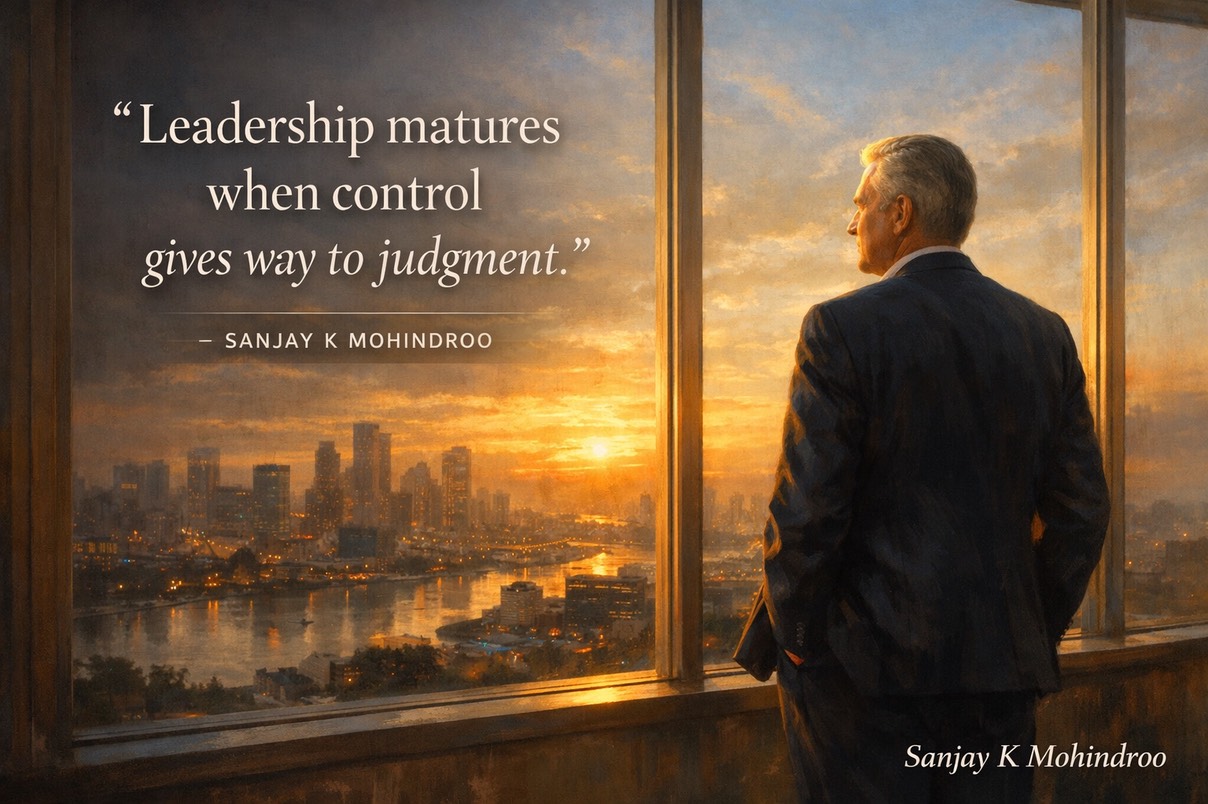
Sanjay K Mohindroo
A shift of seat, not a shift of purpose
From CIO to boardroom voice. A sharp look at mindset shifts, trust capital, and the quiet work behind board readiness.
The boardroom tests judgment, not skill. A CIO’s next move begins years before the invite arrives.
Many CIOs speak of the boardroom as the final frontier. Few prepare for it with intent. The move from CIO to board member is not a promotion. It is a change in stance. The work shifts from control to counsel, from delivery to judgment, from depth to breadth. This piece explores the real work behind board readiness. It looks at mindset, trust, risk sense, and the quiet signals boards watch for long before a seat opens. Through real cases and lived patterns, this post argues that the best board members are shaped years before they are invited. The goal is not a title. The goal is relevance at the table where futures are weighed.
#BoardLeadership #CIOJourney #TechAtTheBoard #CorporateGovernance
The boardroom sees a different horizon
The CIO role is built on motion. Projects ship. Systems scale. Crises demand action. The boardroom runs on stillness. Decisions move slowly and echo long. This contrast catches many strong CIOs off guard.
In the boardroom, no one asks for a roadmap slide. They ask if the company can survive a bad year. They ask if trust can hold when markets turn. They ask if the risk is priced right. The CIO who thrives here is not the loudest voice. It is the one that frames choices with calm weight.
This is not about stepping away from tech. It is about lifting tech into the wider story of value, duty, and time.
The Seat Change
From builder to steward
The CIO builds. The board member stewards. That shift sounds neat. In practice, it cuts deep.
As a CIO, success comes from clarity and speed. You decide. You push. You resolve. As a board member, success comes from restraint. You probe. You test. You wait. The board does not run the firm. It guards its future.
This is where many CIOs struggle. They bring sharp answers when boards want sharp questions. They bring detail when boards want a signal. The shift demands a new form of strength.
Strong board voices speak less. They listen more. When they speak, they change the room.
The Hidden Metric
Trust outweighs skill
Boards do not vote on skill alone. They vote on trust.
Trust here means more than ethics. It means judgment under fog. It means calm when the data is thin. It means the habit of seeing second-order effects. Many CIOs have the skill. Fewer earn the trust.
Trust builds in side moments. It builds when a CIO frames a cyber risk in plain terms. It builds when they admit doubt early. It builds when they push back on bad bets, even when those bets look bold.
Boards watch patterns. They watch who speaks for the firm, not for their role. They notice who links tech spend to cash flow, risk, and brand.
When tech voice reshaped board debate
Consider a global retail firm facing a breach scare. The CIO did not lead with tools or vendors. He framed the issue as customer trust decay over time. He showed how slow response costs more than fines. He spoke in years, not weeks.
That framing changed the board’s stance. Spend was approved. But more than that, the CIO was pulled into wider talks on risk and brand. Two years later, he was asked to join the board of a partner firm.
The lesson is simple. Boards reward those who think like owners.
Language Shift
From systems to stakes
Boards care about stakes. Not stacks.
This does not mean dumbing down tech. It means linking it to the life of the firm. A board hears tech best when it is tied to revenue drag, trust loss, or legal heat.
CIOs aiming for boards must train this muscle early. Speak of uptime as sales flow. Speak of data as a duty. Speak of AI as leverage with limits.
When tech is framed this way, it stops being a cost line. It becomes a choice with weight.
#DigitalTrust #CyberRisk #TechAndValue
Time Horizon
Boards live in long arcs
CIOs often live in quarters. Boards live in cycles.
This time shift matters. Boards ask if the firm can adapt in five years. They ask if culture can absorb change. They ask if leaders can age well.
The CIO who signals board fit speaks in arcs. They link past bets to the current posture. They show how today’s platform shapes tomorrow’s edge. They respect history.
This long view builds quite credibility.
The patient voice wins
A mid-cap bank faced pressure to rush AI use in credit calls. The CIO urged pace. He spoke of bias risk, trust debt, and slow harm. He did not block the move. He shaped it.
Two years on, peers faced probes. This bank did not. The CIO earned a role as risk chair on a fintech board soon after.
Boards remember who keeps them out of trouble.
Governance Sense
Knowing where not to act
Board work is not about action. It is about limits.
Many CIOs love to fix. Board members must know when not to. They must respect lines between oversight and control. Crossing those lines erodes trust fast.
Strong board members ask for clarity. They do not give orders. They hold leaders to account without taking the wheel.
This restraint is a skill. It must be learned.
#BoardConduct #GovernanceMindset
Reputation Before Role
Seats come after signals
No board role begins with a search firm call. It begins with reputation.
Reputation forms in how a CIO handles bad news. In how they treat peers. In how they credit teams. In how they speak when no one is watching.
Boards talk. Chairs compare notes. Patterns travel.
CIOs who aim for boards must treat every forum as a signal. Panels. Audit meets. Crisis calls. Each leaves a trace.
The quiet builder
A CIO at a logistics firm never chased the spotlight. She built trust across ops and finance. When margins dipped, she framed tech cuts with care. She shared pain.
Years later, a private equity chair recalled her tone. She was asked to join a portfolio board to steady a turnaround.
Board seats follow memory, not noise.
Skill Reframe
Depth matters less than synthesis
CIOs are trained for depth. Boards reward synthesis.
A board member must see how tech, law, cash, and culture meet. They must weigh trade-offs fast. They must sense when a small risk can swell.
This does not mean losing tech edge. It means lifting it.
CIOs can train this by sitting with finance, legal, and ops early. By reading cases beyond tech. By watching how the chairs frame the debate.
Ethical Weight
Tech choices now carry moral load
Boards now face choices that shape society. Data use. AI drift. Access gaps. These are not side issues.
CIOs bring rare insight here. But insight must be paired with balance. Boards value those who flag harm without panic. Those who respect law and people alike.
This is where CIOs can lead. But only if they speak with care.
#ResponsibleTech #AIAndTrust
Presence Shift
From expert to peer
In the boardroom, no one is the expert. All are peers.
CIOs used to being the final word must adapt. Boards test ideas through debate. Status carries less weight than clarity.
The CIO who listens well earns room. The one who pushes too hard loses it.
Presence matters. Calm matters. Tone matters.
Preparing Early
Board readiness starts now
Waiting for an invite is too late.
CIOs serious about boards should seek observer roles. Nonprofit boards help. Advisory roles help. Audit exposure helps.
Each builds muscle. Each teaches pace. Each sharpens judgment.
This work is quiet. It compounds.
The board seat is not the goal
The board seat is not the end. It is a platform.
For CIOs, it is a chance to shape firms at scale. To bring tech sense into long-term choices. To guard trust when tools race ahead.
Those who succeed do not chase the seat. They earn the stance.
And when the call comes, it feels less like a leap. More like a return.
#LeadershipJourney #BoardImpact #CIOtoBoard
#BoardLeadership, #CIOJourney, #TechAtTheBoard, #CorporateGovernance, #DigitalTrust, #CyberRisk, #TechAndValue, #BoardConduct, #GovernanceMindset, #ResponsibleTech, #AIAndTrust, #LeadershipJourney, #BoardImpact, #CIOtoBoard